How long to cook a steak, by thickness
Pick how you want it and how thick it is. The clock counts one side, so it rings when it is time to turn the steak over – then start it again for the second side.
How do you want it?
How thick is it?
Press Esc to close, Space to pause
You left this tab while the timer was running. A notification can reach you from a tab you cannot see.
How to cook a steak in three steps
-
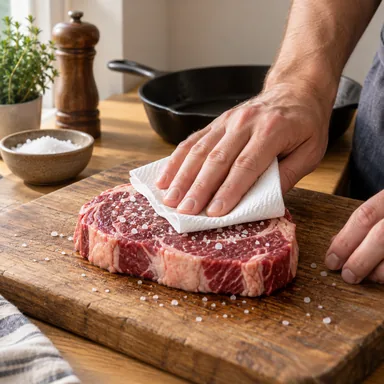
Dry it, then salt it
Out of the fridge half an hour before, and patted properly dry – a wet surface spends its first minute boiling instead of browning, which is most of the answer to why a steak comes out grey. Salt both sides just before it goes in, and be more generous than feels right.
-
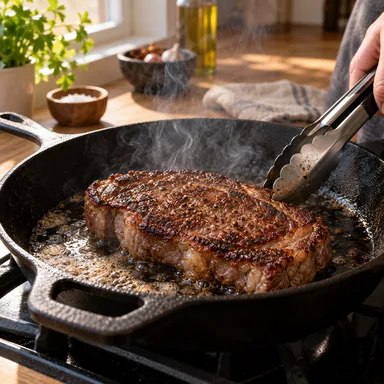
Hot pan, lay it down, start the timer
Heavy pan, a film of oil, and wait until it is genuinely smoking. Lay the steak away from you and then leave it alone – every nudge costs you the crust you are waiting for. When it rings, turn it once and start the clock again for the second side.
-
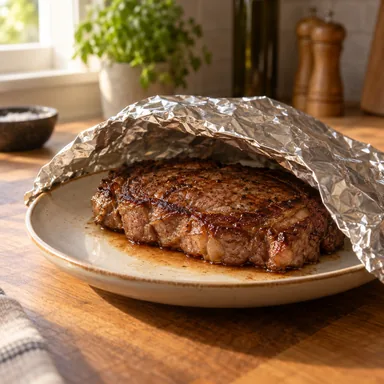
Rest it for five minutes
Onto a warm plate, loosely tented with foil, for five minutes – and this is not optional. Cut it straight out of the pan and the juice runs onto the board instead of staying in the meat. It also keeps cooking while it rests, which is why you take it off just under.
Steak doneness, temperature and time
Times are per side, for a 2 cm steak in a pan preheated until it smokes. The temperature is the middle of the steak when it comes off the heat – it climbs another 2 to 3 °C while it rests, so take it off just under where you want it.
-
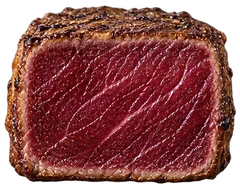 Blue
48 °C · Cool, deep red. 1 min a side.
-
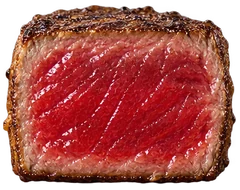 Rare
52 °C · Bright red, barely warm. 1½ min.
-
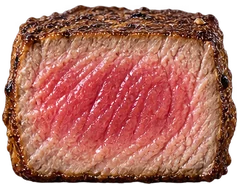 Medium rare
55 °C · Warm red-pink centre. 2 min.
-
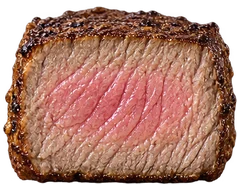 Medium
60 °C · Pink through, no red. 2¾ min.
-
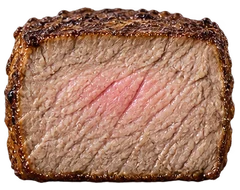 Medium well
65 °C · A blush at the core. 3½ min.
-
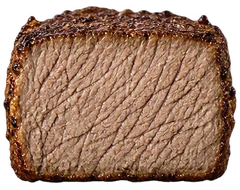 Well done
71 °C · No pink left. 4½ min.
| Cut | Thickness | Best at | Notes |
|---|---|---|---|
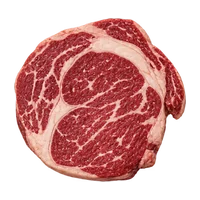 Ribeye | 2.5–3 cm | Medium rare | Heavily marbled, and the one cut that is worse rare than medium rare – the fat needs the heat to render. |
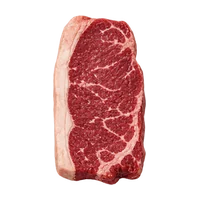 Sirloin | 2–2.5 cm | Medium rare | A band of fat down one side. Stand it on that edge in the pan for a minute before you lay it flat. |
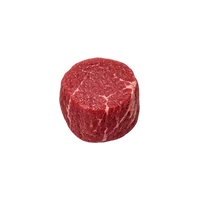 Fillet | 3.5–4 cm | Rare to medium rare | Cut thick and almost fat-free, so it needs the longest per side and dries out fastest past medium. |
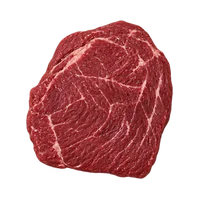 Rump | 2–2.5 cm | Medium rare | Lean, coarse-grained and full-flavoured. Slice it thin and across the grain. |
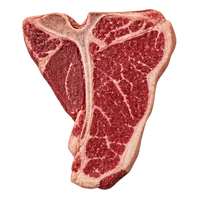 T‑bone | 3–4 cm | Medium rare | Two muscles at once. Keep the small fillet side away from the hottest part of the pan, or it is done first. |
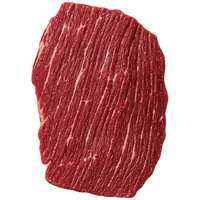 Flank | 1.5–2 cm | Rare to medium rare | Thin and all grain. Past medium rare it goes to leather, and it must be sliced across the grain. |
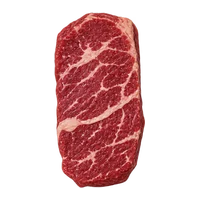 Flat iron | 2–2.5 cm | Medium rare | Well marbled, evenly thick and hard to ruin. The one to practise on. |
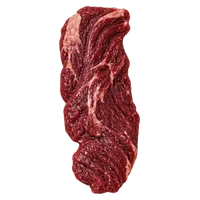 Hanger | 3–4 cm | Medium rare | Loose, rope-like grain that takes a marinade better than any of the others. Never past medium. |
Thickness moves everything and it does not move in proportion. Two and a half centimetres adds about a third to the time, three centimetres three quarters, and four centimetres two and a half times – because the heat has to reach a middle that is twice as far from either face, not just twice as much meat.
Measure the steak rather than the packet. Weight tells you nothing useful here: a 250 g flank and a 250 g fillet are the same meat spread over four centimetres of thickness or one and a half, and they are six minutes apart.
Pink in the middle is safe for a whole steak. The UK Food Standards Agency explains why: on a whole cut, bacteria are only on the outside, and the sear kills them. The USDA is more cautious and sets 63 °C (145 °F) with a three minute rest for all steaks, which falls between medium and medium well on this page. Neither applies to burgers or minced beef, which have to be cooked all the way through.
Food safety
What the official guidance says
- Whole steaks
-
Safe at 63 °C (145 °F), then rested for at least 3 minutes.
Source: USDA - Pink in the middle
-
Whole cuts of beef and lamb only carry bacteria on the outside, so a steak can be served pink inside once the outside is properly seared.
Source: UK Food Standards Agency - Burgers and mince
-
Must be cooked all the way through with no pink, because mincing moves bacteria from the surface into the meat. Safe at 71 °C (160 °F).
Source: UK Food Standards Agency
Checked against the official pages, September 2026.
The number that actually matters
A steak is done at a temperature, not at a time, and every time on this page is an estimate of how long it takes one particular steak to reach one. Pans differ, hobs differ, and a steak that went in cold behaves like a thicker one.
So if you cook steak often, a probe thermometer settles the argument for the price of a couple of steaks. Take it off 2 to 3 °C under the number in the strip: the middle keeps climbing while it rests, and that is carry-over rather than a rounding error.
Turn it once, and leave it alone
The crust is a chemical reaction that needs the surface dry, hot and in contact with the pan, and every time you lift or slide the steak you interrupt all three. Lay it down, start the clock, and do not touch it until it rings.
Turning repeatedly does cook a steak slightly more evenly, and if you are chasing that, do it in a pan hot enough to keep browning through the turns. For one steak in a domestic pan the single turn wins on crust, and crust is most of what a seared steak is for.
When the pan is the wrong tool
Above about four centimetres, or anywhere past medium on a thick cut, the pan burns the outside before the middle catches up – the timer will happily tell you eleven minutes a side, and it is right about the arithmetic and wrong about the steak.
Sear it for the two minutes a side the crust needs and finish it in a 150 °C oven, or reverse it: oven first until the middle is ten degrees under, then a minute a side in a smoking pan. Both leave the timer doing the searing, which is the part that is actually a race.
Popular timers
 Egg timerSoft, medium, hard
 Pasta timerFirm or soft, by shape
 Rice timerSimmer and rest, by type
 Potato timerBoiling times by cut
 Tea timerSteeping times by leaf
 Bread timerBake and cool, by type
 Air fryer timerDings when to shake it
 Corn on the cob timerBoil, grill or microwave
 Baked potato timerAir fryer, oven or microwave
 Air fryer chicken wingsFresh, frozen or buffalo
 Air fryer chicken breastBy size, with the rest
 Air fryer salmonBy thickness, no turning
 Air fryer baconChewy to extra crispy
 Air fryer chicken thighsBone-in, boneless or frozen
 Air fryer drumsticksTurned twice, legs and quarters
Questions about cooking steak
How long do you cook a steak?
For a 2 cm steak in a properly hot pan: about a minute and a half a side for rare, two for medium rare, two and three quarters for medium and four and a half for well done. A 4 cm steak needs about two and a half times as long. Then five minutes resting, whichever you cooked.
How do I know when a steak is done without a thermometer?
Press it. Rare gives like the flesh at the base of your thumb with your hand open; medium rare springs back a little; medium is firm with some give; well done barely moves. It is a rough guide and it improves fast with practice – but the pictures above are what the inside actually looks like, and cutting into one steak to learn is not a crime.
How long should a steak rest?
Five minutes for anything on this page, loosely covered, on a warm plate. It is the same five minutes whether the steak is thin or thick and whether it is rare or well done, which is why it is not one of the timer's two questions. Cut it early and the juice ends up on the board.
Should I flip a steak more than once?
Once is the right answer for one steak in a domestic pan. Repeated turning cooks marginally more evenly, but each turn costs contact time with the pan, and a home hob rarely holds enough heat to build a crust through four or five of them.
Why is my steak grey instead of browned?
Almost always a wet surface or a pan that was not hot enough, and often both. Water has to boil off before anything can brown, so a damp steak in a warm pan steams itself grey. Pat it dry, get the pan to the point where the oil shimmers and smokes, and do not crowd it – two steaks in a small pan drop the temperature and steam each other.
Should a steak be at room temperature before cooking?
Half an hour out of the fridge is worth doing and two hours is not. A cold middle behaves like a thicker steak and needs longer, which is exactly the variable this timer cannot see – so taking the chill off is how you make the times on this page apply to your steak.