How long to boil potatoes, by cut
Pick how yours are cut and the timer counts from the moment the water boils. Start them in cold water, not boiling – that is the part that decides whether they cook evenly.
How are they cut?
Press Esc to close, Space to pause
You left this tab while the timer was running. A notification can reach you from a tab you cannot see.
How to boil potatoes in three steps
-
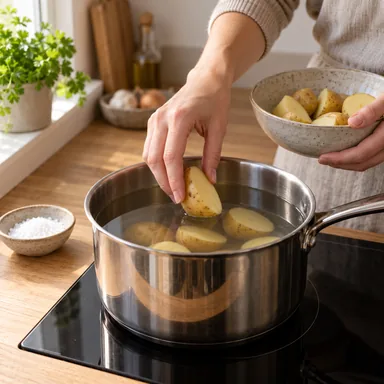
Into cold water, not boiling
Cover them by a couple of centimetres of cold water and salt it properly – about a teaspoon to the litre. This is the step that matters. Dropped into water that is already boiling, the outside is cooking at full speed while the middle is still cold, and the edges are gone before the centre is done.
-
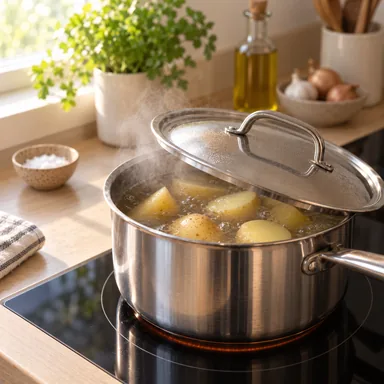
Bring it to the boil, then turn it down
Lid on until it boils, and start the timer there – every time on this page is counted from the boil, not from when the pan went on. Then turn it down to a lazy simmer with the lid ajar. A hard rolling boil knocks the outsides off and gets you nothing in return.
-
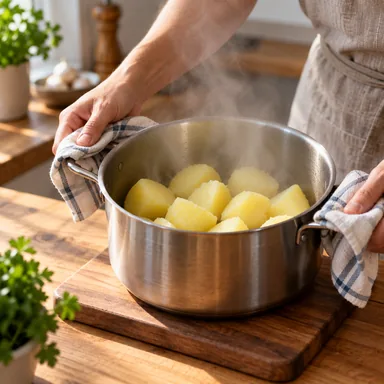
Drain, then let them steam dry
Drain and put them straight back in the hot empty pan off the heat for a minute with the lid off. The surface water boils away and the outsides go floury. It is the difference between mash that takes butter and mash that is already wet, and between roast potatoes that crisp and roast potatoes that do not.
Potato boiling times by cut
From cold salted water, timed from the moment it boils, then held at a gentle simmer. The pictures are drawn for legibility rather than to scale – read the sizes off the table, not off the photographs.
| Potato | From the boil | Best for |
|---|---|---|
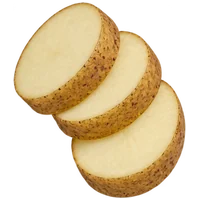 Thick slices, 1 cm | 8–10 min | Gratins and layered bakes |
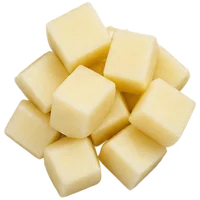 Cubes, 2–3 cm | 10–12 min | Curries, hash, a fast mash |
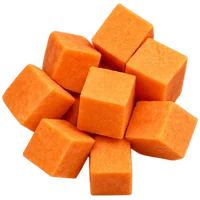 Sweet potato, 2 cm | 10–15 min | Mash and soups |
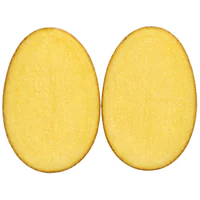 Waxy, halved | 12–15 min | Boiled sides, potato salad |
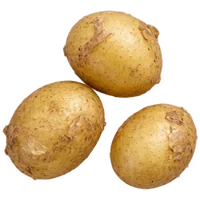 New potatoes, whole | 15–20 min | Butter and salt, salads |
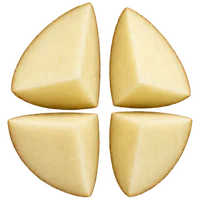 Floury, quartered | 15–20 min | Mash |
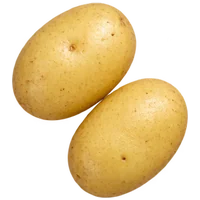 Whole, medium | 20–25 min | Slicing, potato salad |
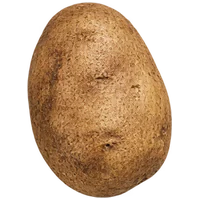 Baking potato, whole | 35–45 min | Rarely worth it – bake it instead |
Parboiling for roast potatoes is the same quartered floury potato at half the time: 7 to 8 minutes from the boil, so the outside is soft and the middle is still firm. Drain, steam dry, then shake them in the covered pan until the edges look scuffed. Those scuffed edges are the crisp bits, and they are made here rather than in the oven.
A potato is done when a knife slides into the middle and back out without lifting the potato with it. Check the biggest one, check it a couple of minutes early, and trust the knife over the table – potatoes vary in density far more than eggs vary in size, and the same bag can run three minutes apart.
Food safety
What the official guidance says
- Green or sprouted potatoes
-
Remove sprouts and cut off any green or rotten parts before cooking. Green parts can hold higher levels of natural toxins called glycoalkaloids.
- Storing potatoes
-
Keep them in a cool, dark, dry place, or in the fridge. Fridge storage does not materially increase acrylamide-forming sugars.
- Freezing
-
Cooked potatoes, and potatoes parboiled for 5 minutes, can be frozen and roasted from frozen until steaming hot all the way through.
Source: UK Food Standards Agency , checked September 2026.
Waxy or floury
Waxy potatoes – new, salad, Charlotte, Anya – are dense and hold together, so they slice cleanly and are what you want for salads and for boiled potatoes served whole. Floury ones – Maris Piper, King Edward, Russet – collapse into fluff, which is exactly what mash and roast potatoes need and exactly what ruins a salad.
It changes the clock by a minute or two at most, which is why it is not one of the timer's questions. It changes the result completely, which is why it is on this page at all: boiling a floury potato for a salad is not a timing mistake you can correct, it is the wrong potato.
Why cold water
Heat travels into a potato slowly, and a potato is thick. Drop one into boiling water and the outer layer hits 100 °C immediately and stays there for the whole cook, while the centre takes twelve minutes to catch up – so the outside is overcooked by the time the middle is ready, and it is the overcooked layer that clouds the water and falls off.
From cold, the whole potato warms together and the difference between the surface and the centre never gets large. It is the same reason a thick steak is reverse-seared and a thin one is not, and it costs nothing but putting them in before the water is hot.
Why they fall apart
Usually a hard boil rather than too long. A rolling boil is water throwing potatoes against each other and against the pan, and the softened outer millimetre does not survive that. Once it is boiling, turn it down until the surface is barely moving.
The other cause is a floury potato cut small. Maris Pipers in two-centimetre cubes have a lot of surface and nothing holding them together, so if they need to stay in pieces, cut them bigger or buy waxy ones.
Popular timers
 Egg timerSoft, medium, hard
 Pasta timerFirm or soft, by shape
 Rice timerSimmer and rest, by type
 Tea timerSteeping times by leaf
 Steak timerBy thickness and doneness
 Bread timerBake and cool, by type
 Air fryer timerDings when to shake it
 Corn on the cob timerBoil, grill or microwave
 Baked potato timerAir fryer, oven or microwave
 Air fryer chicken wingsFresh, frozen or buffalo
 Air fryer chicken breastBy size, with the rest
 Air fryer salmonBy thickness, no turning
 Air fryer baconChewy to extra crispy
 Air fryer chicken thighsBone-in, boneless or frozen
 Air fryer drumsticksTurned twice, legs and quarters
Questions about boiling potatoes
How long do potatoes take to boil?
Counted from the moment the water boils: 10 to 12 minutes for 2 cm cubes, 12 to 15 for halved potatoes, 15 to 20 for quartered or whole new potatoes, and 20 to 25 for whole medium ones. Start them in cold water and the timer starts when it reaches the boil.
Do you boil potatoes from cold or put them in boiling water?
From cold, and it is the single thing most worth changing. In boiling water the outside cooks at full speed while the middle is still cold, so the edges go to mush before a knife will go through the centre. From cold the whole potato heats together. Pasta and green vegetables are the opposite – they go into water already boiling – which is where the habit comes from.
Should you salt the water for potatoes?
Yes, about a teaspoon of salt to a litre. A potato is bland and dense and the boil is the only chance it gets to take on salt all the way through; salting at the table only seasons the outside. It has no meaningful effect on the cooking time.
How do you know when potatoes are done?
Slide a knife or a skewer into the biggest one. It is ready when the knife goes into the middle and comes out without the potato clinging to it. Start checking two minutes before the table says, because density varies more than size does.
Why do my potatoes fall apart when boiled?
Almost always a hard rolling boil rather than too much time. Turn it down to a gentle simmer as soon as it reaches the boil. Floury varieties cut small will break up anyway – cut them larger, or use a waxy potato when they need to hold their shape.
How long do you parboil potatoes for roasting?
Seven to eight minutes from the boil, for quartered floury potatoes. You want the outside soft and the middle still firm. Drain them, let them steam dry in the pan, then put the lid on and shake them until the edges are scuffed and rough – that roughened surface is what turns crisp in the oven.