How long to bake bread, by type
Pick your bread and the timer runs both phases: the bake, then the cooling on a rack that finishes the middle. Start it when the loaf goes in.
Choose your bread
Press Esc to close, Space to pause
You left this tab while the timer was running. A notification can reach you from a tab you cannot see.
How to bake bread in three steps
-
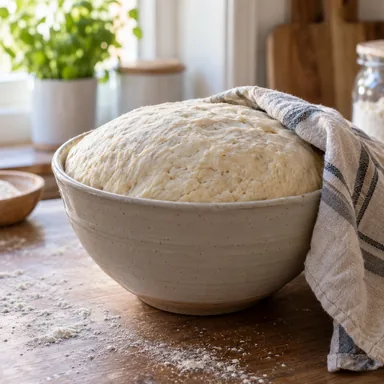
Prove it until it passes the poke test
Cover the dough and leave it somewhere warm until it has roughly doubled. Go by the dough, not the clock: flour your finger, press it in a centimetre, and wait for the dent to come back halfway. The pictures below show what that looks like. Heat the oven while it proves.
-
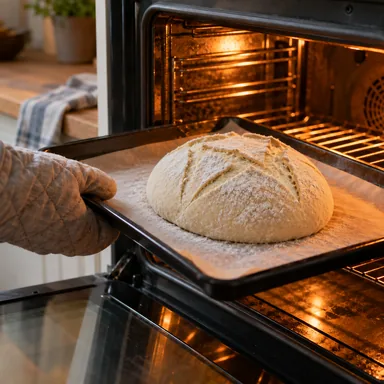
Into a hot oven, start the timer
The oven has to be at temperature before the loaf goes in. The first ten minutes are when it rises, and a cool oven sets the crust before that can happen. Start the timer as the door closes and do not open it for the first twenty minutes.
-
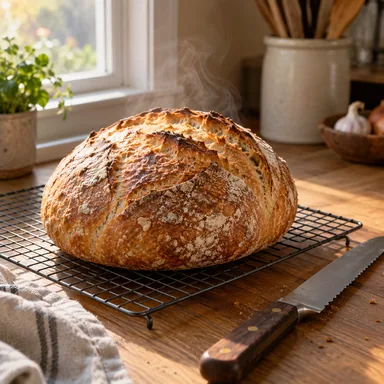
Cool it on a rack before you cut it
Out of the tin and onto a wire rack, so the steam leaves through the bottom instead of soaking back into the crust. The timer runs this part too. The middle is still setting, and a loaf cut early turns gummy however well it baked.
Bread baking times, internal temperatures and cooling
Bake times are for a conventional oven, fully preheated, with the bread on the middle shelf. In a fan oven, set it 20 °C (25 °F) lower and keep the time. Done at is the temperature in the middle of the loaf when it is ready to come out.
-
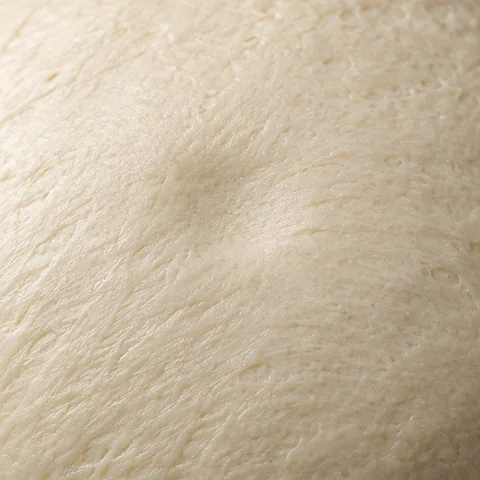 Not ready
The dent springs straight back. Give it longer.
-
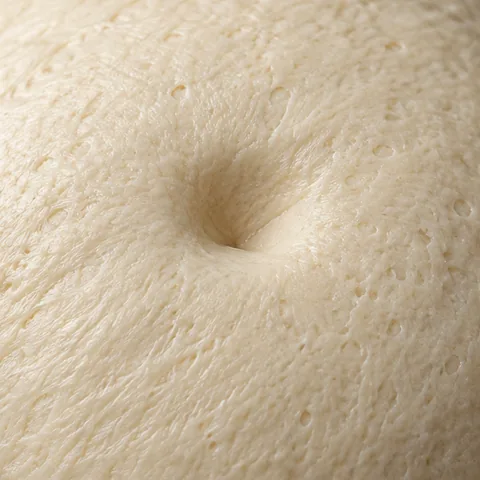 Ready
The dent comes back halfway. Bake it now.
-
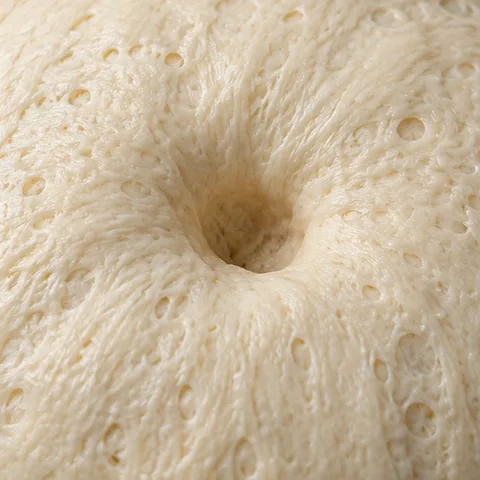 Over-proved
The dent stays and the dough sags. Bake at once, or reshape.
| Bread | Bake | Done at | Cool |
|---|---|---|---|
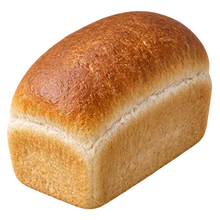 Tin loaf | 30–35 min 220 °C · 425 °F | 93–96 °C 200–205 °F | 1 h |
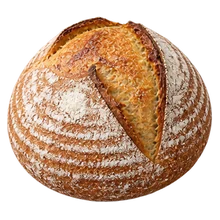 Sourdough | 45 min 240 °C · 475 °F | 96–98 °C 205–210 °F | 2 h |
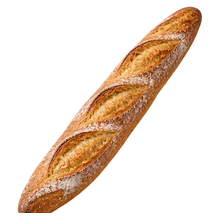 Baguette | 20–25 min 240 °C · 475 °F | 96–98 °C 205–210 °F | 20 min |
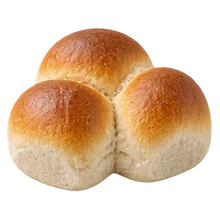 White rolls | 15–20 min 200 °C · 400 °F | 88–93 °C 190–200 °F | 15 min |
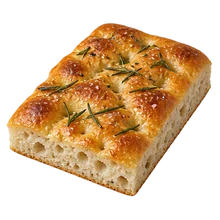 Focaccia | 20–25 min 220 °C · 425 °F | 93–96 °C 200–205 °F | 10 min |
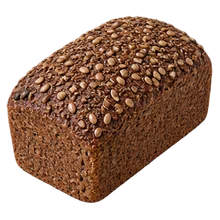 Rye | 60–70 min 230→200 °C · 450→400 °F | 96–98 °C 205–210 °F | 12–24 h |
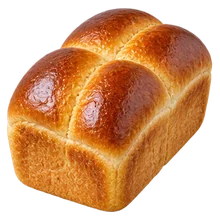 Brioche | 30–35 min 180 °C · 350 °F | 88–90 °C 190–195 °F | 1 h |
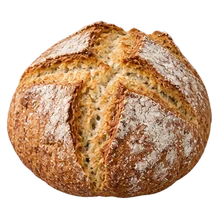 Soda bread | 30–35 min 200 °C · 400 °F | 93–96 °C 200–205 °F | 30 min |
Proving, the second rise after shaping, at a room temperature of about 22 °C (72 °F): 30 to 45 minutes for rolls and baguettes, 45 to 60 for a tin loaf and focaccia, 1 to 2 hours for rye, 1½ to 2 for brioche and 2 to 4 for sourdough. Soda bread has no prove at all. These are when to start checking. The poke test above decides.
The tin loaf is a 900 g (2 lb) tin. A sourdough bakes in a covered pot with the lid on for the first 20 minutes, and can prove overnight in the fridge instead of on the counter. Baguettes want steam, which the second column below explains. Focaccia proves and cools in its tin, and rye goes into a hot oven that is turned down after ten minutes.
A loaf is done at a temperature, and the time is only an estimate of when it gets there. Push a probe thermometer into the middle from the side or the bottom and compare it with the Done at column. Rich doughs with butter, egg or sugar are done cooler, because they set sooner and burn sooner. With no thermometer, turn it out and knock on the bottom. Done sounds hollow, and not done sounds dull.
The cooling times are the least you should wait before slicing, not how long it takes to get cold. Rye is the extreme case. Its crumb is held together by starch rather than gluten, and it keeps setting for most of a day. Cut it that evening and the knife comes out coated.
Why the prove is not on the clock
Yeast works to the temperature of the room, not to a recipe. The same dough that doubles in forty minutes in a warm kitchen in August can take an hour and a half in January, and a timer set from the recipe is right on one of those days.
So the clock here starts when the loaf goes into the oven. Proving gets the poke test instead, and the note under the table gives a range so you know when to start checking. If you want a reminder anyway, open the plain timer in a second tab at the low end of the range and check the dough when it rings.
Steam, and the first ten minutes
A loaf does most of its rising in the first few minutes in the oven, before the crust sets. Steam keeps that crust soft for longer, which is why baguettes and sourdough want it and why a sourdough bakes under a lid for the first twenty minutes.
In a home oven, put an empty tray on the bottom shelf while it heats and pour a cup of boiling water into it as the bread goes in. Then keep the door shut. Opening it early lets the steam and the heat out at the moment the loaf needs both.
Soft crust or crisp crust
The cool decides the crust as much as the bake does. On a bare rack the steam leaves and the crust stays crisp. Wrapped in a clean tea towel, it softens, which is how soda bread and rolls are traditionally meant to be eaten.
Never cool bread in the tin or on a plate. The steam has nowhere to go but back into the loaf, and the bottom goes soggy within ten minutes.
Popular timers
 Egg timerSoft, medium, hard
 Pasta timerFirm or soft, by shape
 Rice timerSimmer and rest, by type
 Potato timerBoiling times by cut
 Tea timerSteeping times by leaf
 Steak timerBy thickness and doneness
 Air fryer timerDings when to shake it
 Corn on the cob timerBoil, grill or microwave
 Baked potato timerAir fryer, oven or microwave
 Air fryer chicken wingsFresh, frozen or buffalo
 Air fryer chicken breastBy size, with the rest
 Air fryer salmonBy thickness, no turning
 Air fryer baconChewy to extra crispy
 Air fryer chicken thighsBone-in, boneless or frozen
 Air fryer drumsticksTurned twice, legs and quarters
Questions about baking bread
How long do you bake bread?
A standard 900 g tin loaf takes 30 to 35 minutes at 220 °C (425 °F) in a conventional oven, or 200 °C with a fan. A sourdough boule takes about 45 minutes at 240 °C (475 °F), baguettes 20 to 25 and rolls 15 to 20. It is done when the middle reads 93 to 96 °C (200 to 205 °F) or the bottom sounds hollow when you knock on it.
How long should bread cool before cutting?
An hour for a tin loaf, two for a sourdough, twenty minutes for baguettes and fifteen for rolls. The middle is still cooking in its own steam when it comes out of the oven, and cutting it early is the most common reason for a gummy crumb. Rye needs twelve hours at least.
What internal temperature should bread be?
Lean bread such as a tin loaf, focaccia or soda bread is done at 93 to 96 °C (200 to 205 °F) in the middle. Crusty sourdough, baguettes and rye go a little higher, to 96 to 98 °C (205 to 210 °F). Rich breads with butter and egg, like brioche, are done at 88 to 90 °C (190 to 195 °F). Measure in the thickest part, from the side.
How long do you bake bread at 350 °F?
350 °F (180 °C) suits soft, enriched breads. A sandwich loaf made with milk and butter takes about 35 to 40 minutes in a 9×5 inch tin, brioche 30 to 35, and banana bread 55 to 65. Lean crusty bread wants a hotter oven, 425 to 475 °F, and at 350 it comes out pale with a thick, leathery crust.
How long do you bake banana bread?
55 to 65 minutes at 175 °C (350 °F) in a 900 g (2 lb, 9×5 inch) loaf tin. It is done when a skewer in the middle comes out clean or the centre reads about 95 °C (200 °F). Unlike a yeast loaf, leave it in the tin for ten minutes before turning it out, because it is too tender to handle hot, then let it cool on a rack for an hour before slicing.
How long does bread take to prove?
The second rise, after shaping, usually takes 45 minutes to an hour for a yeasted tin loaf at a normal room temperature, and two to four hours for sourdough. It depends so much on how warm the room is that it is better judged by the dough: it is ready when a floured fingertip leaves a dent that springs back halfway.
How do I know if my dough is over-proved?
The poke test leaves a dent that does not come back, and the dough feels slack and may have sunk a little. Bake it straight away and it will usually still be edible, if flatter. For a better loaf, knock it back, reshape it and prove it again for a shorter time.
Why is my bread dense in the middle?
Usually one of three things: it was under-proved, the oven was not fully hot when it went in, or it was cut before it had cooled. The first two stop the loaf rising properly. The third leaves a crumb that was fine in the oven looking raw on the board.
Can I bake bread in a fan oven?
Yes. Set it 20 °C (25 °F) lower than the temperature in the table and keep the same time. A fan dries the surface faster, so if the crust colours before the time is up, lay a sheet of foil loosely over the top for the rest of the bake.