How long to cook pasta, by shape
Pick your shape, then say how you like it – firm and al dente, or soft all the way through. It works out the time and rings when the pan is ready.
Choose your shape
How do you want it?
Press Esc to close, Space to pause
You left this tab while the timer was running. A notification can reach you from a tab you cannot see.
How to cook pasta in three steps
-
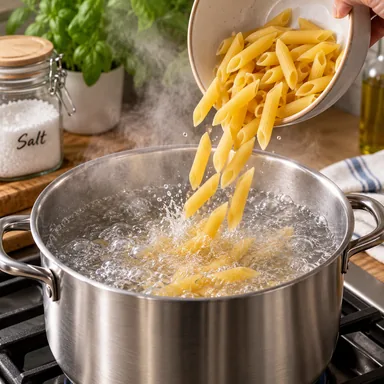
A big pan, properly salted
A litre of water and 10 g of salt for every 100 g of pasta – about two level teaspoons a litre. Room matters as much as the salt: a crowded pan drops off the boil when the pasta goes in and stays there, and everything below is written for water that comes straight back.
-
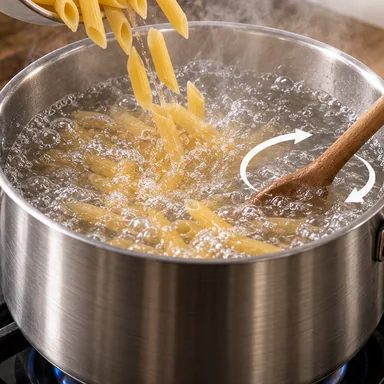
In it goes, stir for ten seconds
Start the timer as the last of it goes in, not when the water returns to the boil – the dip is already inside every packet time. Stir for the first ten seconds and then leave it: pasta sticks in the first minute and almost never after it. Lid off.
-
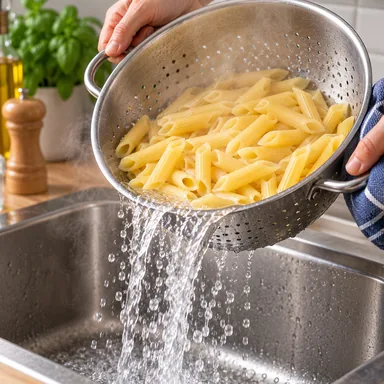
Taste it, then drain
Two minutes before it rings, fish one out and bite it. Keep a mugful of the water before you drain – it is salted and full of starch, and nothing else loosens a sauce the same way. Do not rinse it unless it is going into a cold salad.
Pasta cooking times by shape
For dried durum wheat pasta, dropped into water that is already at a full rolling boil and well salted. The range is where that shape usually lands; the packet beats this table, because two brands of penne are not the same penne.
-
 Chalky
A wide white core. Two or three minutes to go.
-
 Al dente
A thin pale line at the centre. Firm to the bite.
-
 Cooked through
No line left, even colour. Soft, and not a mistake.
-
 Overdone
Swollen and splitting at the edge.
| Shape | Cooking time | Suits |
|---|---|---|
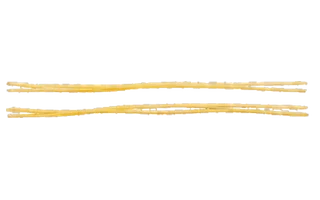 Angel hair | 3–4 min | Broth, thin oil sauces |
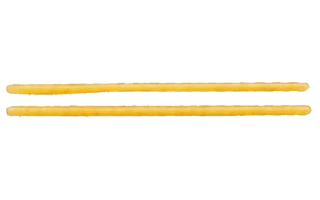 Spaghettini | 7–8 min | Light tomato, seafood |
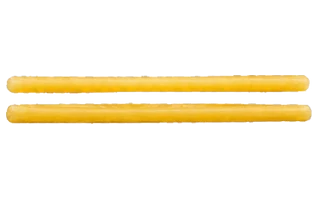 Spaghetti | 8–10 min | Tomato, garlic and oil, carbonara |
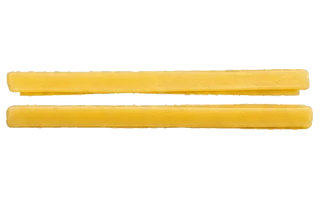 Linguine | 9–11 min | Clams, prawns, pesto |
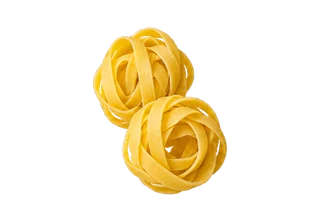 Tagliatelle, dried | 7–9 min | Ragù, cream, mushrooms |
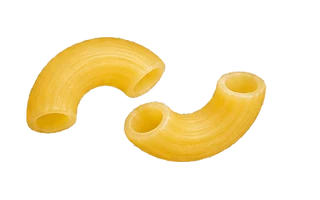 Macaroni | 7–9 min | Cheese sauce, bakes |
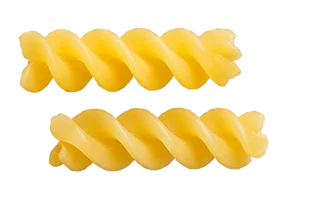 Fusilli | 9–11 min | Pesto, chopped vegetables |
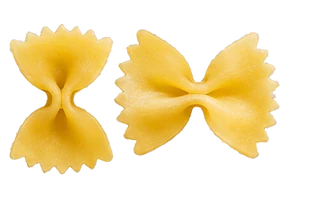 Farfalle | 10–12 min | Cream and peas, cold salads |
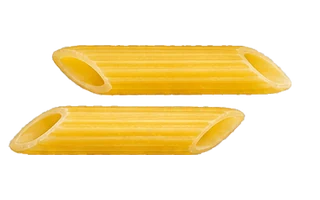 Penne rigate | 10–12 min | Arrabbiata, oven bakes |
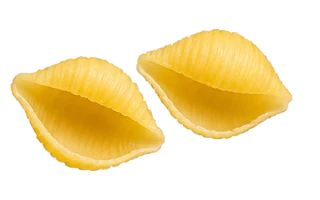 Conchiglie | 10–12 min | Chunky sauces, salads |
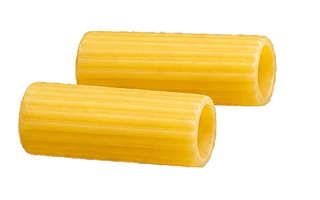 Rigatoni | 11–13 min | Thick meat ragù, bakes |
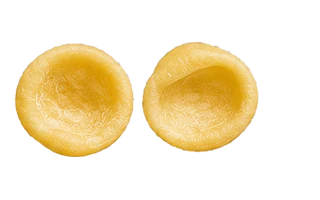 Orecchiette | 11–13 min | Broccoli and sausage |
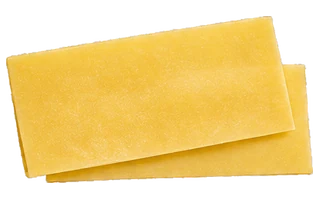 Lasagne sheets | 10–12 min | Layered and baked |
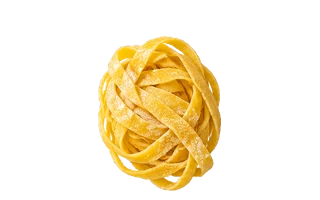 Fresh egg pasta | 2–4 min | Butter, cream, light ragù |
Al dente sits about a minute before the top of a range, and cooked through at the top of it. The ranges are not all the same width, either, and that is not sloppiness: angel hair is under a millimetre thick, so its whole journey from firm to soft happens inside a minute, while a rigatoni will sit at the texture you want for a minute either side of it.
Within a range, the cut matters. Smooth penne runs roughly a minute quicker than penne rigate, and bronze-cut pasta – the rough, pale kind that clouds the water – about a minute slower. The shapes that are thick in the middle by design, orecchiette and farfalle among them, want the top of their range and a bite taken from the thickest part.
None of which settles the only question that matters. Cook one the way you actually like it, note the number, and use that as your own – it beats every table, including this one.
Water, salt and how much pasta
A litre of water and 10 g of salt to every 100 g of pasta. That is 80–100 g of dried pasta a person for a main course, or about 125 g of fresh – fresh weighs more for the same plate because a good deal of it is still water.
Less water than that works, and gives you a starchier, more useful cooking water, but it needs stirring and it takes longer to come back to the boil. Salt once it is boiling rather than before: it dissolves at once and it is the only chance the pasta itself gets to be seasoned.
Other types: fresh, wholewheat and gluten-free
Fresh egg pasta is done in two to four minutes and is usually ready shortly after it floats, so it is tasted rather than timed. Wholewheat runs close to the times above but goes from firm to soft in a much shorter window, so start tasting three minutes out rather than two.
Gluten-free pasta has no gluten net holding it together and behaves differently in both directions: follow its own packet, taste early, and take it out a touch firmer than you want it – corn and rice pastas firm up noticeably as they cool.
Finishing it in the sauce
If the pasta is going back into a hot pan with the sauce, drain it a minute or two before al dente. It carries on cooking in there, and that last minute spent in the sauce rather than in water is where it picks up the flavour.
Add a splash of the cooking water as you toss it. The starch in it is an emulsifier – it pulls the fat and the water in a sauce together and makes it cling to the pasta instead of pooling under it. This is also why you do not rinse: rinsing washes off the surface the sauce is meant to grip.
Popular timers
 Egg timerSoft, medium, hard
 Rice timerSimmer and rest, by type
 Potato timerBoiling times by cut
 Tea timerSteeping times by leaf
 Steak timerBy thickness and doneness
 Bread timerBake and cool, by type
 Air fryer timerDings when to shake it
 Corn on the cob timerBoil, grill or microwave
 Baked potato timerAir fryer, oven or microwave
 Air fryer chicken wingsFresh, frozen or buffalo
 Air fryer chicken breastBy size, with the rest
 Air fryer salmonBy thickness, no turning
 Air fryer baconChewy to extra crispy
 Air fryer chicken thighsBone-in, boneless or frozen
 Air fryer drumsticksTurned twice, legs and quarters
Questions about cooking pasta
How long do you cook spaghetti?
Eight to ten minutes for dried spaghetti, with most packets landing on nine. Start the timer as the pasta goes into water that is already at a full rolling boil, and start tasting two minutes before it rings.
What does al dente actually mean?
Firm to the bite. Snap a piece in half and look at the cut: al dente pasta shows a thin pale line at the centre and no chalky core. Past that it is cooked through and softer, which is not wrong, just a different thing.
Does pasta have to be al dente?
No. Al dente is the Italian preference and it is what most packet times are written for, but it is a preference and not a standard – plenty of people want theirs soft all the way through, and a softer pasta carries a creamy sauce perfectly well. Firm or soft, the shape still decides most of the time; how you like it decides the last minute or two.
How much pasta per person?
About 80 to 100 grams of dried pasta a person for a main course, and roughly 125 grams if it is fresh. Pasta roughly doubles in weight as it cooks, so 100 grams dried lands on a plate as a little over 200.
How much salt goes in the water?
About 10 grams a litre, which is two level teaspoons, added once the water is boiling. This is the only chance the pasta itself gets to be seasoned – salt in the sauce seasons the sauce.
Should I add oil to the water?
No. Oil floats, so it never reaches the pasta while it is cooking, and what it does coat when you drain is the surface the sauce needs to stick to. Enough water and a stir in the first minute is what stops it clumping.
Should you rinse pasta after cooking?
Not if it is going into a hot sauce. The starch left on the surface is what makes a sauce cling, and rinsing washes it off along with the heat. Rinse only for a cold pasta salad, where the pasta needs to stop cooking and not stick together in the bowl.
Does fresh pasta take the same time?
No, far less. Fresh egg pasta is done in two to four minutes and is usually ready shortly after it floats, so it is worth tasting from two minutes rather than setting and walking away.
Why is my pasta still hard in the middle?
Usually the water was not at a full boil when the pasta went in, or there was too little of it, so the temperature never recovered. Thick shapes like rigatoni and orecchiette are also genuinely slower than the box average – give them the top of the range.